
For many travelers in Nigeria, the most confusing part of the Schengen process is not deciding where they want to go. It is understanding how to move the application forward correctly once the trip becomes serious. A Schengen visa application from Nigeria is rarely difficult because the form itself is not complicated. The difficulty usually comes from three practical questions: which Schengen state should receive the application, what documents are actually required, and where in Nigeria the file should be submitted. Those three points are what usually decide whether the process feels orderly or unnecessarily frustrating.
The Schengen system follows one common short-stay framework across the participating states. In general, a short-stay Schengen visa allows travel for up to 90 days in any 180-day period, and applications should normally be submitted no earlier than 6 months before travel and at least 15 days before the journey. At the same time, the right place to apply is not chosen freely by the traveler. The application must be lodged with the Schengen state that is the main destination, meaning the country of the main purpose of stay or the longest stay. If the journey includes several Schengen countries and the duration is the same in each, the application should be submitted to the country of first entry.
That rule matters especially for Nigerian applicants because different Schengen states use different submission channels in Nigeria. Some accept files through an embassy or consulate, while others rely on an external visa service provider such as TLScontact, VFS Global, or BLS International. In some cases, your state of residence in Nigeria affects where you should submit. In other cases, the decisive factor is simply the Schengen destination you are applying to. This is exactly why many applicants lose time: they gather documents first and only later discover they are following the wrong submission route.
A stronger approach is to think of the Schengen visa process in Nigeria as a sequence. First, decide the correct destination state. Second, identify the correct submission channel in Nigeria. Third, build a document file that reads as one clear trip. Once those three parts are aligned, the application becomes much easier to continue with confidence.
What a Schengen visa means for applicants in Nigeria
A Schengen visa is a short-stay visa for travel within the Schengen area, generally allowing a stay of up to 90 days in any 180-day period. It is meant for travel such as tourism, business visits, family visits, conferences, short training, and similar temporary purposes. It is not the correct route for long-term residence, full employment, or permanent relocation, which fall under national visa procedures instead.
For applicants in Nigeria, that distinction is important from the beginning. If the visit is truly temporary and the travel purpose falls within the short-stay framework, the Schengen route is the right one. If the stay will exceed 90 days or the purpose is long-term study, employment, or relocation, then the traveler should not continue with a short-stay Schengen file. That is one of the first mistakes that creates avoidable delays.
Another point that deserves attention is that a Schengen visa is generally valid for travel across the Schengen area, not only the country that issued it. However, the application itself must still be submitted to the correct main-destination state. In other words, a traveler may later move within the Schengen area during the authorized trip, but the initial application still has to be filed with the state that is properly responsible for the itinerary.
The first decision: which Schengen state should handle the application?
This is the stage where many Nigerian applicants unintentionally weaken their own file. The Schengen rules do not allow the traveler to choose any convenient embassy or visa center. The application must go to the state that matches the trip properly. If one country is the main purpose of travel, that country handles the application. If one country has the longest stay, that country handles the application. If the trip is split equally across several Schengen states, the application should go to the country whose external border will be crossed first.
This rule sounds technical, but it has a very practical effect. A traveler based in Lagos might prefer a simpler or more familiar visa center, but that convenience cannot replace destination logic. If the actual route is mainly Spain, then the Spain route should be used. If the trip is centered on Portugal, then the Portugal route is the correct one. If the itinerary is for the Netherlands, the Dutch route – including the residence-based state logic used in Nigeria – becomes the relevant path. Filing through the wrong state because it feels easier can create credibility problems before the application is even assessed.
Schengen visa requirements from Nigeria
The core Schengen requirements are broadly the same whether the applicant is filing from Nigeria or from another country, although individual embassies and service providers may request destination-specific additions. According to the European Commission’s general Schengen guidance, applicants should normally prepare a valid passport, a visa application form, a photo that meets ICAO standards, medical insurance, supporting documents related to the purpose of travel, evidence of financial means, evidence of accommodation, and proof of the traveler’s intention to return after the trip. Fingerprints are also collected when the application is submitted, subject to applicable exemptions. The passport should generally remain valid for at least three months after departure from the Schengen area.
From a Nigerian applicant’s point of view, these requirements are easier to understand when grouped into practical categories. The first category is identity and form documents: passport, form, photographs, and, where requested, biometric enrollment. The second category is trip justification: why you are going, what kind of trip it is, and which country is the main destination. The third category is travel structure: route planning and proof of where you will stay. The fourth category is financial reliability: evidence that the trip can be supported without uncertainty. The fifth category is return logic: documents showing that the traveler has reasons and obligations to come back after the short stay.
One point deserves special attention: travel medical insurance. Official Schengen channels repeatedly treat this as mandatory for short-stay applications. The Spain visa route in Nigeria, for example, explicitly states that a travel insurance certificate must be submitted at the visa application center for Schengen travel. That is not a decorative paper. It is part of the standard short-stay requirement set.
Where to submit a Schengen visa application in Nigeria
This is the part applicants usually want clarified as early as possible. In Nigeria, the place of submission depends on the Schengen state you are applying to and, in some cases, the state where you live.
The broad rule remains simple: you submit to the mission or authorized visa partner of the Schengen state responsible for your trip. But the Nigerian route is not identical for every country. France states officially that visa applications lodged in Nigeria are processed by the Consular Section of the French Embassy in Abuja and the Consulate General of France in Lagos, and that, from 3 October 2023, applicants can go through TLScontact centers in Abuja and Lagos.
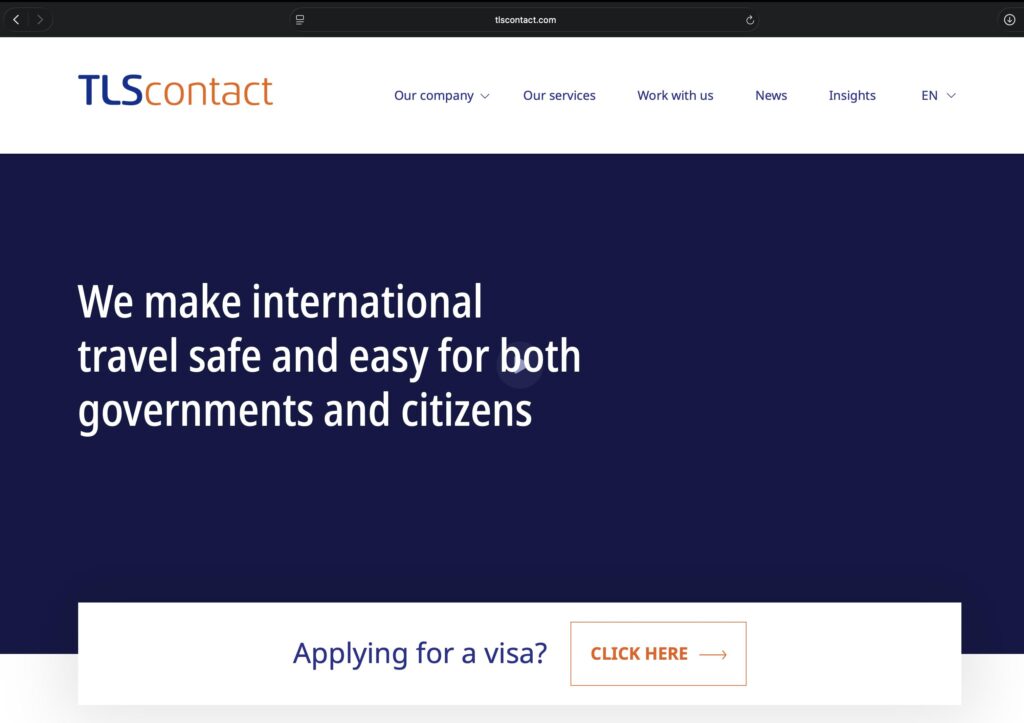
Spain uses BLS International as its official partner in Nigeria. The Spain visa route in Nigeria explains that BLS International is the official partner of the Embassy of Spain, sets out the short-stay categories such as tourist, business, medical, family/friend visit, conference, and transit, and also states that travel insurance is mandatory. The Nigeria Spain visa site also shows the Lagos center details and notes that processed passports can be collected during the published collection hours.
Portugal uses VFS Global in Nigeria. The official VFS Portugal route states that VFS is the official partner of the Embassy of Portugal in Nigeria and includes “attend a centre” pages for Lagos and Abuja, which confirms that applicants should check the relevant VFS route rather than trying to submit informally. The official Lagos center page lists the Portugal Visa Application Centre in Lekki, Lagos.
The Netherlands offers one of the clearest examples of state-based submission logic inside Nigeria. The official Netherlands route says that where you apply depends on where you live. Applicants living in Adamawa, Bauchi, Benue, Borno, FCT Abuja, Gombe, Jigawa, Kaduna,
Kano, Katsina, Kebbi, Kogi, Nasarawa, Niger, Plateau, Sokoto, Taraba, Yobe, and Zamfara can apply at the Belgian application centre of TLScontact in Abuja. Applicants living in other Nigerian states can apply at the French application centre of TLScontact in Lagos. This is one of the clearest official examples showing why “where to submit” in Nigeria is not always a simple Lagos-or-Abuja choice.
That means the practical answer for Nigerian applicants is this: first identify your main destination state, then check the official website of that destination’s embassy, consulate, or external service provider in Nigeria. Do not assume all Schengen applications go to one common office, and do not assume that the same city handles every destination.
A step-by-step way to continue the application properly
The process becomes easier when treated as a sequence rather than a rush.
The first step is to confirm the main destination of the trip. If the application is for Spain, Portugal, France, the Netherlands, or another Schengen state, that should be clear from the route and purpose before the form is even completed. The second step is to identify the official submission channel in Nigeria – embassy, consulate, BLS International, VFS, or TLScontact depending on the destination. The third step is to prepare the file around the actual purpose of travel, not around guesswork. Tourism should look like tourism, business should look like business, and family visits should look like family visits.
The fourth step is to prepare the supporting file with care: passport, form, photographs, travel insurance, purpose documents, finances, and accommodation. The fifth step is to book the appointment and submit with enough time in hand. The European Commission’s Schengen guidance says applications should be lodged at least 15 days before travel and no earlier than 6 months beforehand. The sixth step is to remain available after submission, because the consulate or service provider may request further documents or updates.
For Spain specifically, the official Nigeria route advises applicants to submit complete files at least three working weeks before departure and notes a minimum processing time of 20 calendar days, though timing can vary by case. That is a useful example of why timing matters. Even where the general Schengen rules are known, the destination-specific route may still publish its own practical advice or service handling expectations.
Why many Nigerian Schengen files lose strength
The most common problem is not always refusal-worthy fraud or a dramatic missing paper. Often it is simpler than that. A traveler chooses the wrong destination route, misunderstands where to submit, prepares a vague itinerary, or leaves accommodation too unclear. The application then feels weaker than it should have been.
Another common issue is document mismatch. The passport details are correct, but the route is too vague. The financial evidence exists, but the destination and length of stay do not align well with it. The traveler has a purpose of visit, but not enough clarity on where they will stay. These are not always fatal problems, but they make the file less convincing. A stronger Schengen application is one in which every major document supports the same journey.
How Schengen Reservation can fit into that process
This is where Schengen Reservation can fit into the process naturally. Many Nigerian applicants do not struggle most with the form itself. They struggle with the travel side of the file – the part that must show how the trip is structured and where the traveler intends to stay.
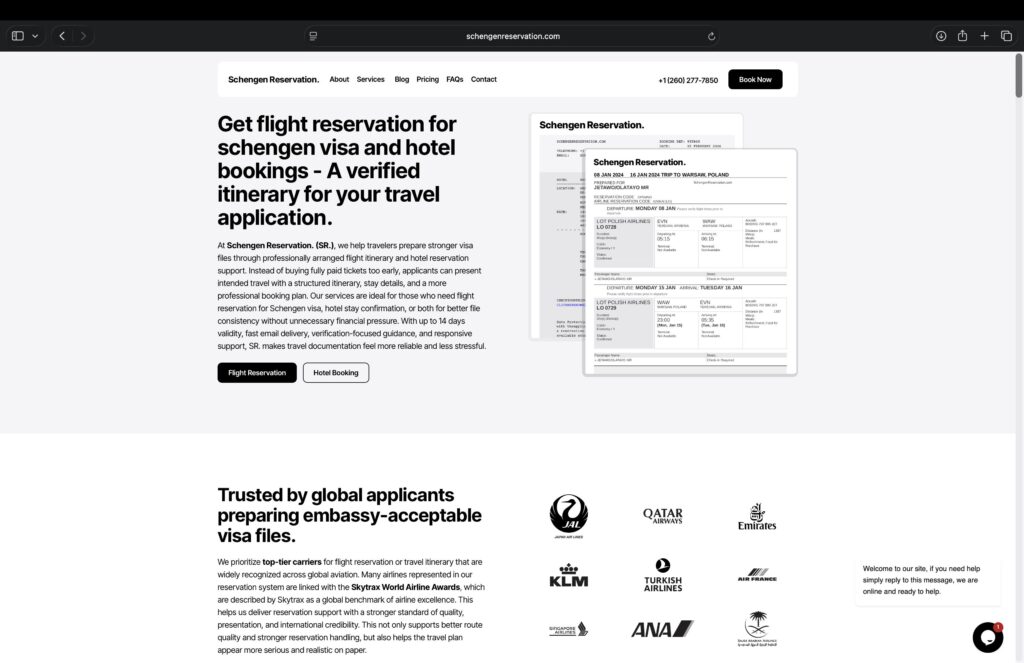
If the route still needs shape, a clear flight itinerary for visa can help show intended travel in a more organized way. If the accommodation side is still missing, a hotel booking for visa or broader proof of accommodation support can help make the stay pattern more readable. If both sides of the trip still need to be aligned, using one source to help structure the route and stay details can make the file easier to understand as one journey rather than as disconnected papers. In that sense, Schengen Reservation is not a substitute for the visa application. It is simply one way of making the application’s travel logic clearer.
Schengen states Nigerians can apply to, and the general costs involved
From Nigeria, a Schengen visa application can generally be made for any of the 29 Schengen states, provided the chosen country is the correct main destination for the trip. The current Schengen area consists of Austria, Belgium, Bulgaria, Croatia, Czechia, Denmark, Estonia, Finland, France, Germany, Greece, Hungary, Iceland, Italy, Latvia, Liechtenstein, Lithuania, Luxembourg, Malta, the Netherlands, Norway, Poland, Portugal, Romania, Slovakia, Slovenia, Spain, Sweden, and Switzerland. In practical terms, this means a Nigerian applicant is not restricted to only a few destinations; the key rule is that the application must be filed for the Schengen state that is the main purpose or longest stay of the journey.
As for cost, the standard Schengen short-stay visa fee is currently €90 for adults and €45 for children aged 6 to under 12. In addition to that standard visa fee, applicants in Nigeria should usually expect a separate service charge when the file is lodged through an external provider such as TLScontact, VFS Global, or BLS International, because the European Commission notes that service fees may apply through authorized providers.
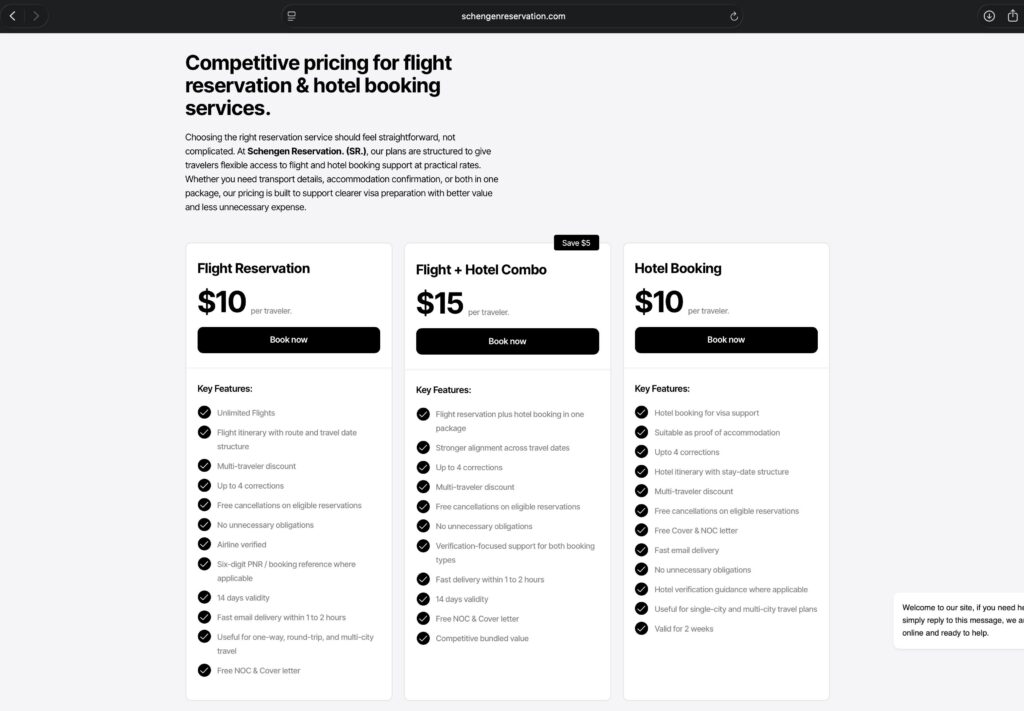
For the travel-support side of the application, Schengen Reservation currently lists its Flight Reservation service at $10 per traveler, its Hotel Booking service at $10 per traveler, and its Flight + Hotel Combo at $15 per traveler. These services are designed to provide organized travel-support documents such as a structured flight itinerary, hotel booking, and coordinated travel-and-stay documentation for visa preparation. Visa fees and reservation prices can change, so it is best to check the latest amount before submission or payment.
Practical tips to improve a Schengen application from Nigeria
The first and most important step is to submit to the correct Schengen state. A strong file weakens quickly if the jurisdiction is wrong. The second is to keep the itinerary simple and credible. A short-stay trip does not need to look grand to look convincing. It needs to make sense. The third is to make sure the accommodation side and the travel side support one another. The fourth is to ensure the financial evidence fits the country, duration, and style of travel being claimed. The fifth is to apply with enough time in hand, especially where external centers and appointment slots are involved.
Applicants should also read their own file before submission. They should know where they are going, how long they are staying, where they are staying, and why the destination state they chose is the correct one. The stronger the traveler understands the file, the stronger the file usually appears.
FAQs
Can a Nigerian applicant choose any Schengen embassy to file through?
No. The application must be submitted to the Schengen state that is the main destination, meaning the country of the main purpose or the longest stay. If the stay length is equal in several states, the correct route is the country of first entry.
How early should a Schengen visa application be submitted from Nigeria?
The European Commission states that Schengen applications should be lodged at least 15 days before travel and no earlier than 6 months before the intended journey.
What are the main Schengen visa requirements from Nigeria?
The standard set usually includes a valid passport, visa application form, compliant photograph, medical insurance, supporting documents for the purpose of travel, proof of financial means, accommodation evidence, and proof of intention to return. Fingerprints are normally collected when the application is submitted.
Does where you live in Nigeria affect where you submit?
Sometimes, yes. The official Netherlands route specifically says that certain Nigerian states must use the TLScontact route in Abuja, while applicants from other states use the TLScontact route in Lagos.
Which visa centers are commonly used in Nigeria for Schengen states?
Depending on the destination, official routes in Nigeria include TLScontact, VFS Global, and BLS International. France uses TLScontact in Abuja and Lagos, Portugal uses VFS Global in Nigeria, and Spain uses BLS international Nigeria.
Is travel insurance mandatory?
Yes, official Schengen application guidance treats medical insurance as part of the standard document set, and Spain’s Nigeria route explicitly says that the travel insurance certificate must be submitted at the visa application center.
Can Schengen Reservation help with the travel side of the application?
Yes. If the application still needs a clearer route structure or accommodation support, Schengen Reservation can help with a flight itinerary, a hotel booking, or both together in a coordinated way.
Conclusion
A Schengen visa application from Nigeria becomes much easier when the process is approached in the correct order. First identify the main destination. Then confirm the official submission route in Nigeria. Then build a file that reads as one clear trip. The legal rules are shared across the Schengen area, but the submission route inside Nigeria changes by destination and, in some cases, by the state where the applicant lives. That is why understanding where to submit is just as important as understanding what to submit.
For Nigerian applicants, the strongest files are usually the clearest ones: destination logic that makes sense, accommodation that matches the route, finances that match the trip, and a travel plan that looks complete. Once those parts are aligned, the application stops feeling like a scattered document set and starts looking like what it should be — a short, temporary, and well-prepared journey.