
If you are searching for a dummy ticket for visa, you are most likely trying to solve a very practical problem: you need to show planned travel for your visa application, but you do not want to purchase a fully paid ticket too early. That concern is entirely understandable. In visa preparation, timing matters, finances matter, and document quality matters. You want something that helps your file look organized and credible, yet you also want to avoid unnecessary expense before a decision is issued.
In more professional language, a dummy ticket is usually understood as a flight reservation, a flight itinerary, a flight booking, or a structured travel itinerary for visa application. Different travelers use different phrases, but they are usually searching for the same type of document: a reservation-based itinerary that presents intended movement in a clear, practical, and submission-ready format. Some people call it a travel ticket, others search for a dummy ticket reservation, and some look specifically for a verifiable flight reservation for visa application. The wording varies; the need stays the same.
A strong visa file is rarely built on one document alone, but the travel side of your file often shapes the first impression of planning. If your route details look vague, rushed, or disconnected from the rest of the application, the overall file may feel weaker than it should. On the other hand, when your travel plan is presented in a structured way with visible dates, route logic, booking details, and a coherent stay plan the application begins to feel more deliberate. That is why understanding the role of a dummy ticket is so important.
This guide will walk you through the subject in a clear and practical way. You will learn what a dummy ticket really is, how it differs from a fully paid ticket, how to book it urgently through Schengen Reservation, how to verify it, how validity works, how cancellation and corrections should be understood, and why this document is often one of the most useful elements in a well-prepared visa file. You will also see how related terms such as flight confirmation for visa, travel reservation, travel confirmation itinerary for visa, and flight reservation without payment fit naturally into the same conversation.
What is a dummy ticket for visa?
A dummy ticket for visa is a reservation-based flight document used to show intended travel for a visa application. Although the word “dummy” is common in search behavior, what applicants usually need is not something casual or dubious. What they actually need is a properly structured itinerary that sets out the journey in a way that looks understandable, professional, and credible.
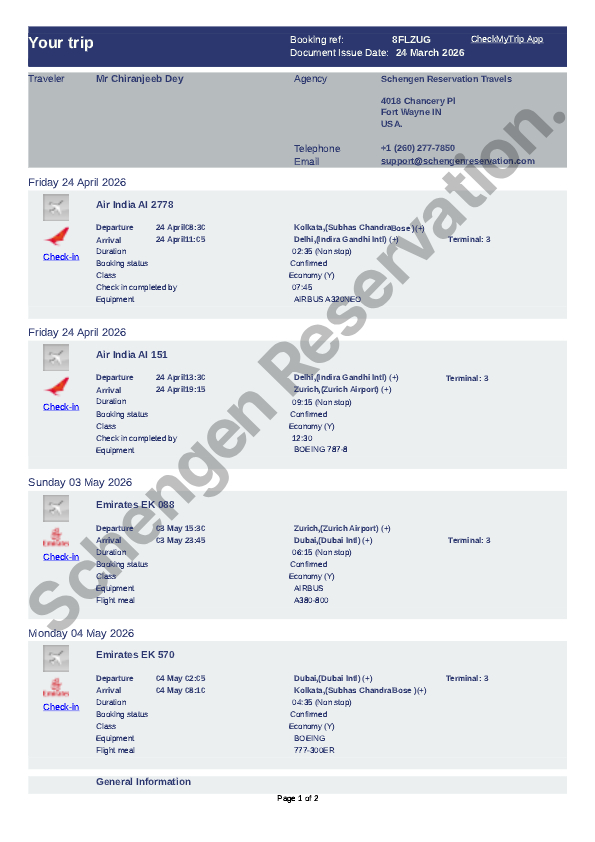
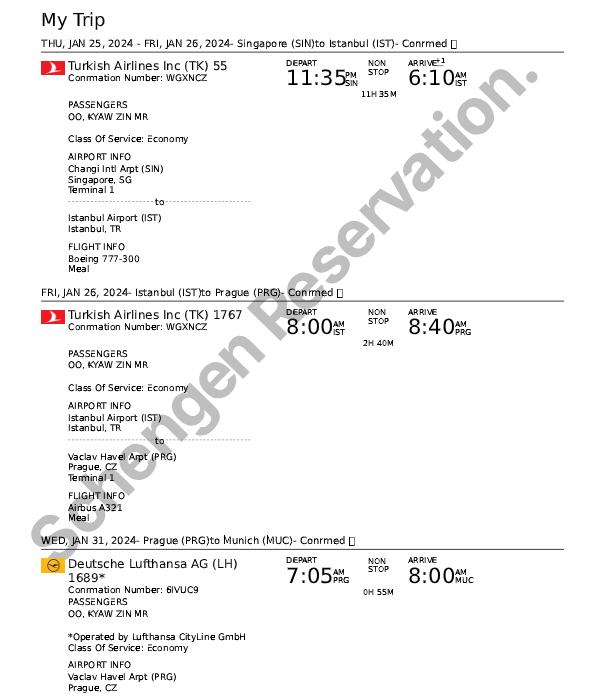
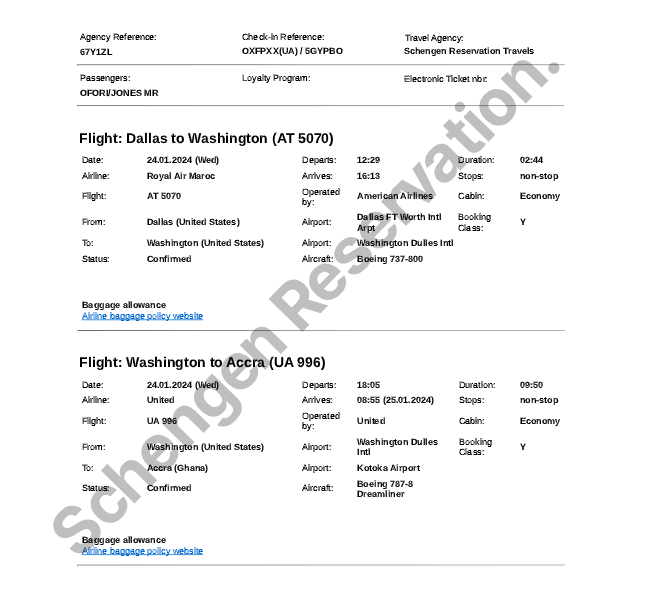
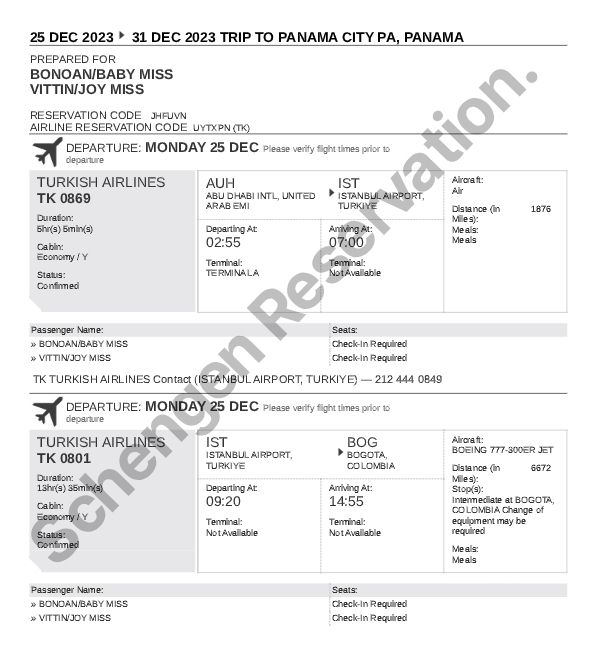
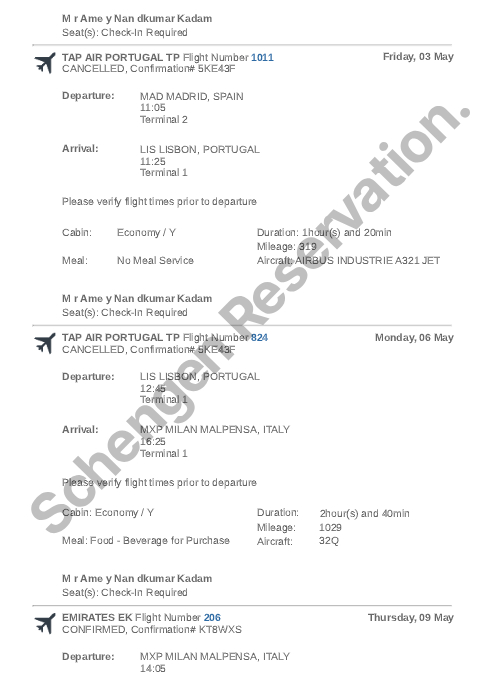
In practical terms, this kind of document normally includes:
- the traveler’s name
- the departure and arrival cities
- the travel dates
- the airline details
- the route structure
- a booking reference or PNR where applicable
That is why many people use other names for the same thing. You may see it described as a flight itinerary, a flight itinerary for Schengen visa, a reserved flight booking, a dummy ticket for visa, or even a ticket confirmation. These are not entirely different products in ordinary travel-document language. They are different ways of describing a structured reservation that supports the transport side of your application.
The key point is this: a dummy ticket should not be thought of as a decorative add-on. Its role is to show that your journey has been planned. It gives your application shape. It shows when you intend to depart, where you intend to go, and how the travel part of your file fits together.
Why travelers use a flight reservation instead of a fully paid ticket?
Most applicants use a flight reservation for visa because they want to avoid financial exposure before the visa decision becomes clear. Buying a full ticket too early can feel imprudent, especially if you are still waiting for the embassy or consulate to decide your case. A reservation-based travel document offers a more cautious and more strategic middle ground. You want a way to show intended travel, but you also want to preserve flexibility. That is not a sign of weak planning. In many cases, it is the opposite. It means you are planning carefully.
A well-prepared itinerary helps you present intended movement without rushing into final payment. It can support the logic of your trip, align with your accommodation record, and give your file stronger structure while you finish the rest of your paperwork. When you look at it from that perspective, a dummy ticket is not a workaround. It is a practical part of visa preparation.
Why this document matters more than people think?
Many travelers assume the flight document is just one line on a checklist. In reality, it often does more than that. It helps transform the file from a collection of papers into an actual travel narrative.
If your itinerary is clear, your route is sensible, and your dates align with the rest of your documents, the file starts to feel more coherent. If your itinerary is weak, random, or poorly formatted, the file may feel less persuasive even when other documents are strong. This is why the format, detail, and presentation of a travel itinerary for visa application matter so much.
A stronger document helps show:
- intended travel timing
- route logic
- entry and return planning
- journey sequence
- a more serious level of preparation
Travelers not only search for “dummy ticket” they also search for dummy travel reservation, onward flight confirmation, and dummy flight. These searches reflect a deeper concern: not just getting a document, but getting one that actually helps the file look better.
How to book a dummy ticket urgently through Schengen Reservation.?
If you need the document quickly, the process should be fast but not careless. Urgency works best when your details are already clear before you start.
When you use the Schengen Reservation. website for a flight itinerary, the booking flow is built around traveler information, trip structure, flight details, consular information, and timing. To get the best result, move through the process methodically rather than randomly.
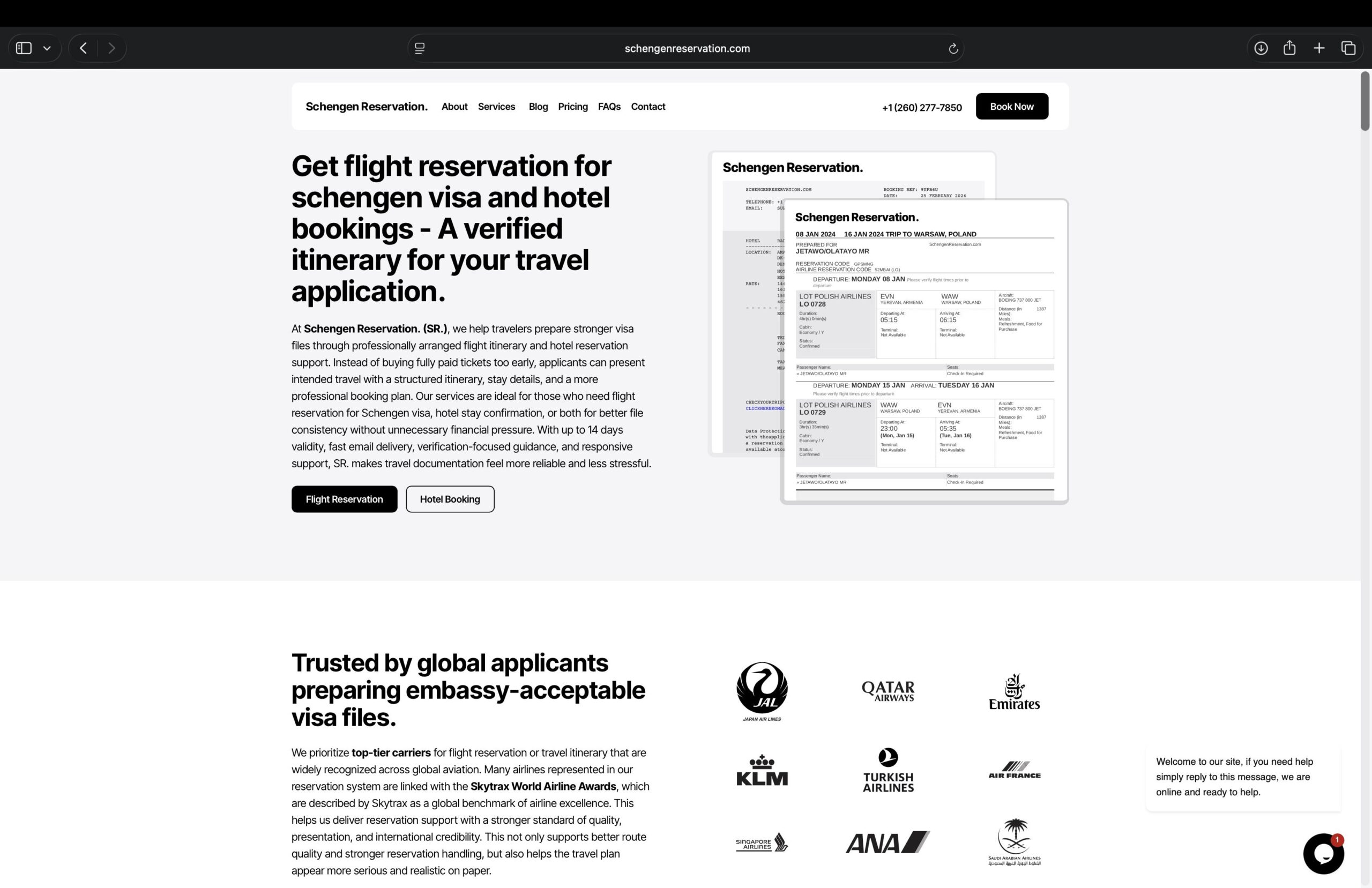
Step 1: Start from the correct service page
Go to the website and choose the Dummy Flight Reservation service. This is the page intended for applicants who need a structured itinerary for visa use rather than a fully issued retail ticket.
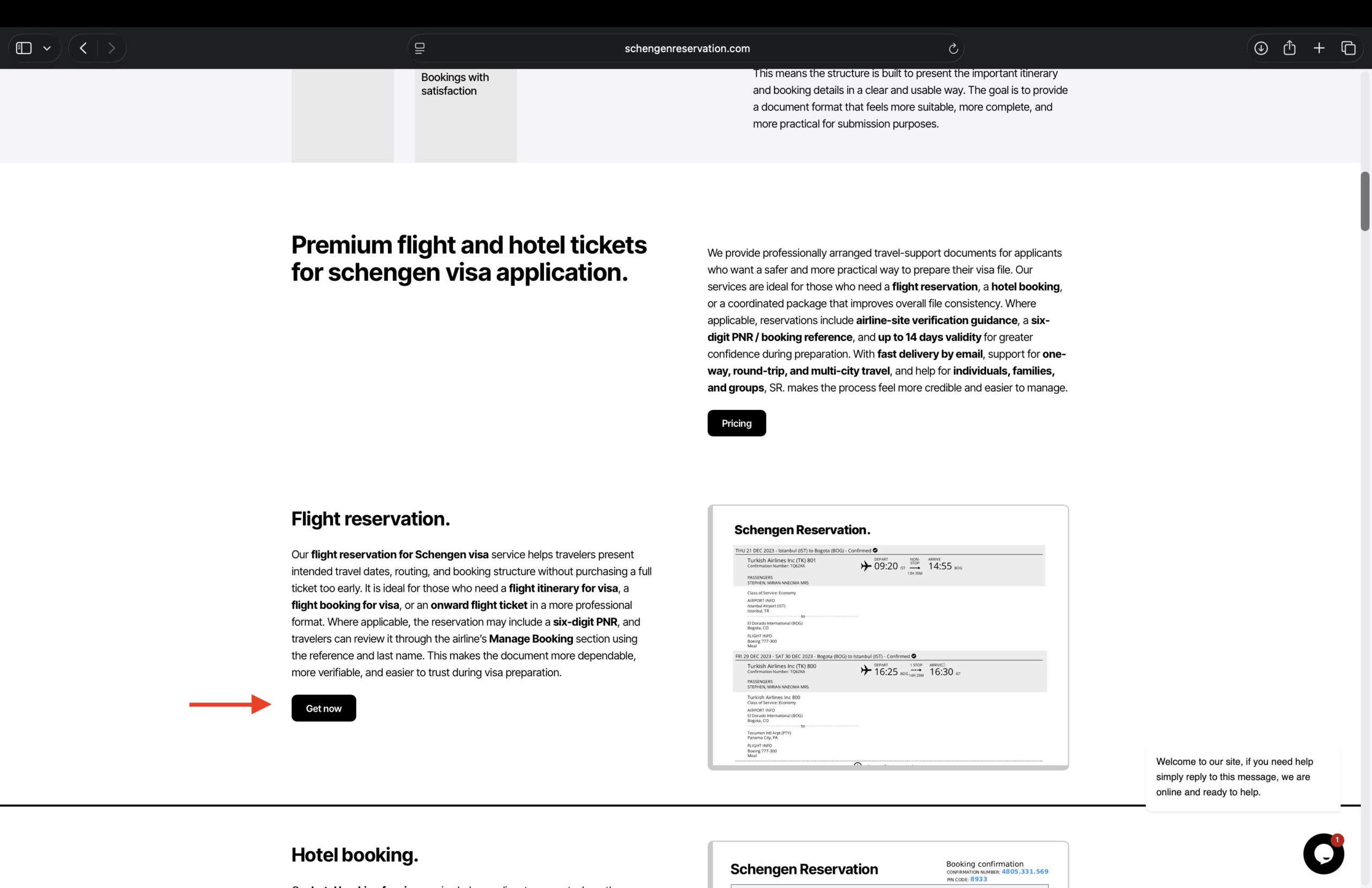
Step 2: Enter your traveler details exactly as on your passport
This is one of the most important steps. Use the name exactly as it appears in your passport. Do not shorten it, improvise it, or type casually. Accuracy at this stage reduces the need for corrections later and helps the final document feel more dependable.
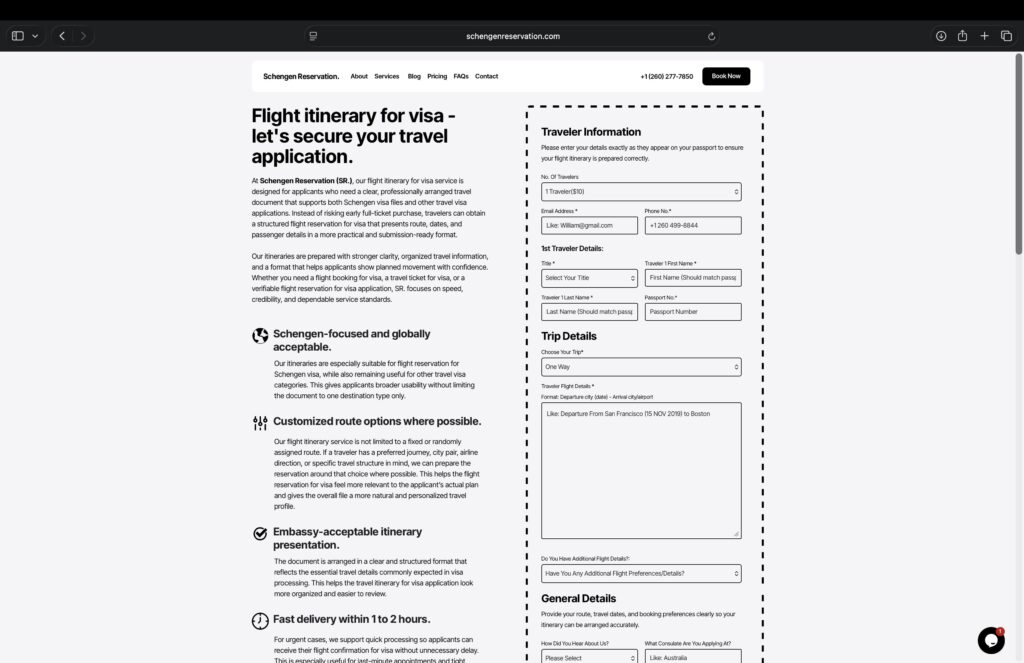
Step 3: Select the number of travelers
If you are applying alone, choose a single traveler. If you are applying with family members, a spouse, or a group, choose the correct number of passengers from the beginning. This helps the itinerary reflect the real structure of the trip.
Step 4: Choose the right trip format
Decide whether your journey is:
- one-way
- round-trip
- multi-city
This choice matters because the structure of the itinerary should reflect your intended journey. If your trip includes entry into one city and exit from another, a multi-city option may be more natural than forcing a simple return pattern.
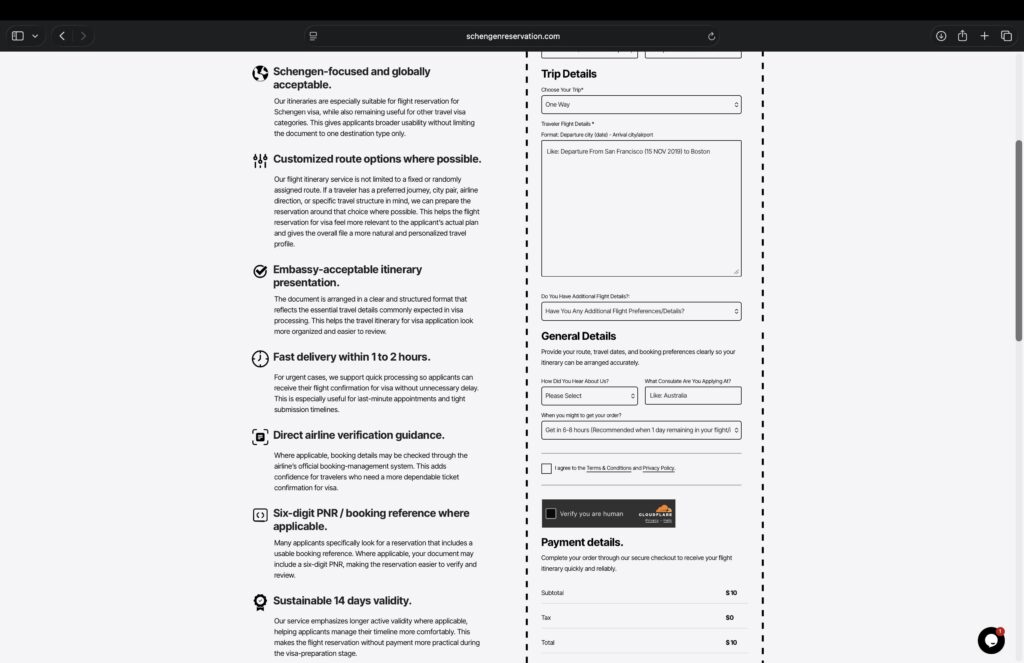
Step 5: Add your route details carefully
Enter your departure city, destination city, travel date, and return date where applicable. If your route involves more than one destination, make sure the sequence is logical. A stronger flight itinerary for visa is one that mirrors your intended journey rather than something random.
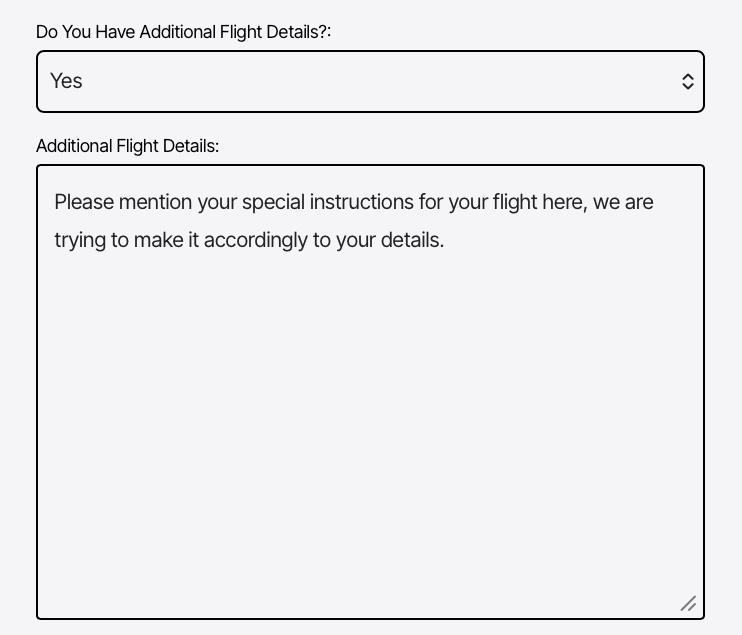
Step 6: Mention route preferences where needed
If you have a preferred city pair, departure pattern, or routing style, include that in the additional preference area. This is especially useful if you want your flight booking for visa to feel closer to your actual plan rather than a generic assignment.
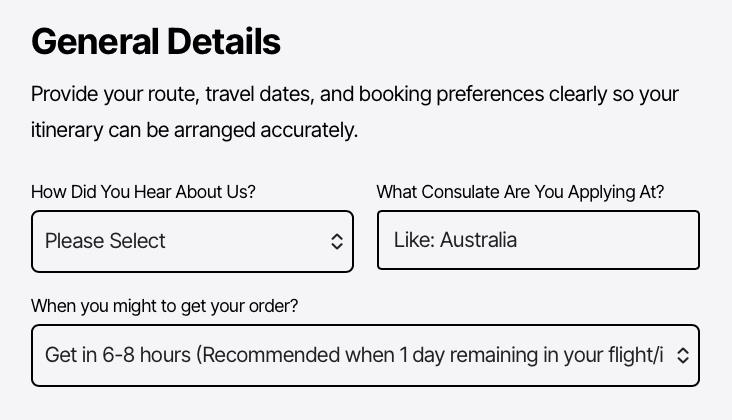
Step 7: Add your visa-related timing details
If the form asks for interview date, interview timing, or consulate details, complete them carefully. These details help shape the urgency and relevance of the booking.
Step 8: Choose the required delivery timing
If you need the reservation urgently, choose the faster delivery option available. If your file is not urgent, you can choose a later delivery time. This flexibility is useful because not every traveler has the same submission pressure.
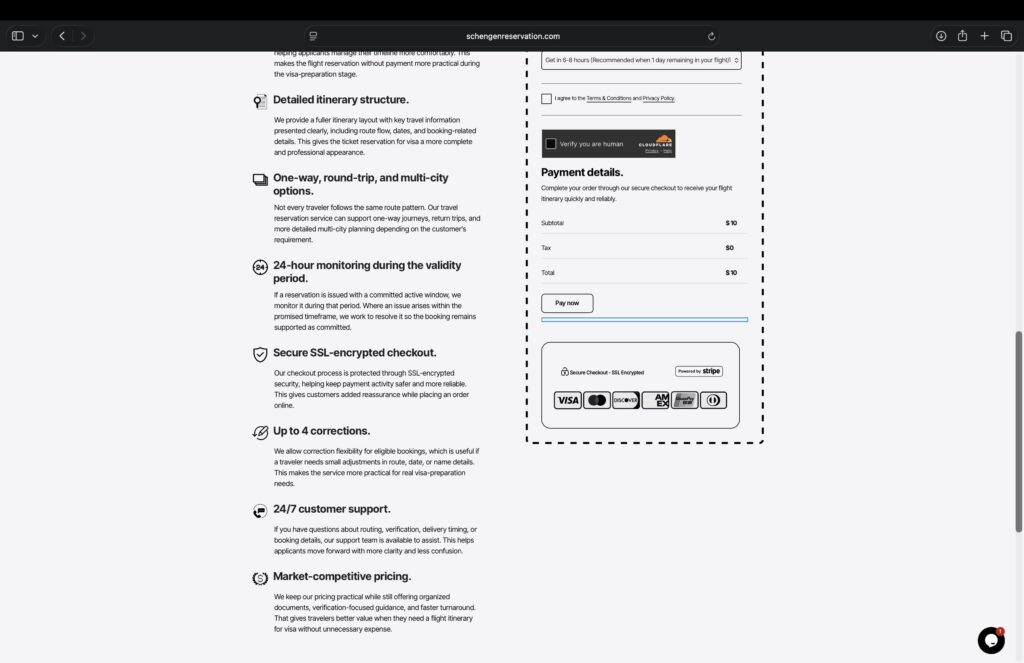
Step 9: Complete checkout securely
Proceed through payment and submit the request. Because the checkout process is SSL-secured, you can place the order with greater confidence while your request enters processing.
Step 10: Watch for the confirmation email
Once your order is placed, monitor your inbox. If you do not receive confirmation in the expected time, check your spam or junk folder as well.
That is the practical booking flow. It is simple, but it rewards clarity. The more accurate your route, traveler details, and timing are at the start, the smoother the urgent-booking process becomes.
How to get a dummy ticket urgently without making mistakes?
Urgency can be useful, but urgency without preparation often leads to avoidable errors. The smartest urgent booking is still an informed one.
Before you order, make sure you already know:
- the exact spelling of the traveler’s name
- the intended departure city
- the intended arrival city
- the departure date
- the return date, if applicable
- whether the trip is one-way, return, or multi-city
- whether you want a specific route pattern
This matters because many last-minute issues are not caused by delivery time. They are caused by incomplete or inconsistent traveler information. If your route changes three times during the order process, if the name does not match the passport, or if your dates do not match your planned stay, the itinerary may need correction and your urgency advantage may narrow.
A better urgent process is not chaotic speed. It is disciplined speed.
How to verify your flight reservation?
Verification is one of the most important parts of the discussion, and many applicants want this explained plainly.
If your itinerary includes a booking reference or PNR where applicable, you can usually check the flight reservation through the airline’s booking-management system. In practical terms, the process works like this:
- Go to the airline’s official website.
- Open the Manage Booking or similar section.
- Enter the booking reference or PNR shown on the itinerary.
- Enter the traveler’s last name.
- Review the booking details if the airline supports that verification flow.
This matters because a verifiable flight reservation for visa application gives the traveler more confidence than a vague record with no review logic behind it. It feels more substantial, more credible, and easier to trust.
Where verification is available, it helps answer a major unspoken question applicants often have: Is this reservation actually structured in a serious and reviewable way? A booking that can be checked where applicable usually feels much stronger than one that simply exists as a static document.
What a PNR means and why it matters?
The PNR, or booking reference, is one of the most important technical details in a strong flight reservation. Where applicable, it can function as the identifying key that helps the booking be reviewed through airline systems.
Not every traveler understands this term at the start, but many of them start searching for it later. That is why phrases such as ticket confirmation for visa and verifiable flight reservation are often tied closely to the idea of a booking reference.
A six-digit PNR, where applicable, does not merely add technical decoration. It makes the document feel more serious. It adds clarity. It helps the itinerary move from “a document” to “a booking with identifiable structure.” For many applicants, that difference matters psychologically as much as it matters practically.
Why lasting validity changes the usefulness of the document?
A dummy ticket that arrives quickly is helpful. A dummy ticket that remains useful for a stronger period is even better.
Visa preparation rarely happens in one uninterrupted sitting. You may still be arranging financial records, hotel bookings, letters of support, insurance, or cover documentation. If your itinerary becomes inactive too quickly, you can end up under pressure while trying to synchronize the rest of your file.
This is where up to 14 days validity becomes highly valuable. A longer active window gives you room to organize the rest of your documents, review the file calmly, and submit with greater order. It reduces pressure. It also makes the itinerary feel less temporary and more serviceable.
A reservation with lasting validity is especially useful when:
- your appointment is not immediate
- your hotel dates are still being aligned
- your cover explanation is still being finalized
- you need time for printing or translation
- you want room for small adjustments
This is one reason validity should not be treated as a minor feature. It is a practical advantage that affects the entire timing of your preparation.
Active monitoring during the validity period by SR.
Another valuable service point is monitoring. If a reservation is issued with a committed validity window, it is reassuring to know that support does not simply end at delivery.
Active monitoring means that the reservation remains under service attention during that committed period. If an issue arises while the validity window is still active, steps can be taken to resolve it and support the booking as promised.
That matters because the real value of a flight confirmation for visa is not only that it exists on day one. Its real value lies in whether it remains dependable during the period when you are actually using it for your file.
A supported booking is a more intelligent booking.
Why route customization is a major advantage?
Many weak services treat every traveler as if they have the same journey. Serious travelers know that this is rarely true.
Some applicants are flying in and out of the same city. Some are entering one Schengen country and departing from another. Some need a route that aligns with a meeting, a conference, a family stay, or a multi-stop visit. A strong travel reservation should therefore reflect the intended journey where possible.
That is why route customization matters. If you can request a preferred city pair, a certain travel structure, or a route sequence closer to your actual plan, the resulting itinerary feels much more natural. It also makes the file feel more persuasive because the travel details do not look randomly assigned.
A more customized itinerary creates: better relevance, better consistency, better document logic, and stronger alignment with the rest of the trip.
Why a detailed itinerary structure improves your file?
A structured document is easier to trust than a chaotic one. That is true in almost every form of paperwork, and visa preparation is no exception.
A better itinerary does not merely contain data. It shows the journey in a way that is visually and logically comprehensible. That means route flow, date sequence, booking-related details, and traveler information should all feel ordered. A travel confirmation itinerary for visa should not look like fragments stitched together. It should look like a coherent travel plan.
This is one reason presentation quality matters so much. The document is not being judged only by the traveler. It becomes part of the full file. The more readable and coherent it is, the easier it becomes for the file itself to feel well assembled.
Dummy Ticket for Visa Samples
Common mistakes applicants should avoid
The biggest errors are often simple.
Do not:
- submit the wrong spelling of your name,
- choose dates that do not align with your hotel record,
- ignore your real route pattern,
- wait until the final minute to think through the journey,
- or assume any booking format will work equally well.
The stronger your own clarity is before ordering, the stronger the final itinerary usually becomes. A thoughtful flight booking for visa is not only about provider quality. It is also about traveler accuracy.
Why a professionally arranged itinerary feels different
A professionally arranged itinerary does not simply provide booking lines. It provides shape. It creates rhythm in the travel plan. It makes the file easier to understand.
This is why many applicants feel a difference immediately when they compare a weak travel record with a stronger one. One looks improvised. The other looks composed.
If you are preparing a visa file, that distinction matters. The travel side of your application should not feel accidental. It should feel intended.
Why hotel booking still matters in the same conversation?
Even though this article focuses on a dummy ticket, the flight side of the file should not be thought of in isolation. In many cases, the lodging side matters just as much.
A hotel booking for visa helps provide proof of accommodation, which shows where you intend to stay and for how long. If your flight itinerary and your accommodation details fit naturally together, the overall application becomes much easier to follow. If they do not align, the file can start to feel disjointed.
This is why many travelers eventually choose the combined package. A coordinated approach means your route dates and hotel stay dates can support one another. That creates stronger overall continuity and can make the file appear much more complete.

Frequently Asked Questions
What is a dummy ticket for visa?
A dummy ticket for visa is a reservation-based flight document used to show intended travel for a visa application. It is often better understood as a flight itinerary or flight reservation rather than a casual “fake ticket.”
Is a dummy ticket the same as a flight reservation?
In most visa-related use, yes. Travelers often use terms like flight reservation, flight itinerary, travel reservation, and ticket reservation for visa to refer to the same type of document.
How do I book a dummy ticket urgently?
You can book urgently by visiting the SR. flight-itinerary page, entering your traveler details exactly as on passport, selecting trip type, adding route details, including any preferences, and proceeding through checkout.
Can I choose one-way, round-trip, or multi-city?
Yes. The booking flow supports different trip patterns so the itinerary can better match the actual journey you intend to show.
Can I request a preferred route?
Yes, where possible. If you have a preferred route structure, city pair, or travel pattern, it can be mentioned during booking.
How do I verify the reservation?
You can usually verify the booking by visiting the airline website, opening Manage Booking, and entering the booking reference together with the traveler’s last name where applicable.
What is a PNR?
A PNR is a booking reference. Where applicable, it can help identify the reservation and support airline-side review.
How long can the reservation remain active?
Where applicable, the service supports up to 14 days validity, which helps applicants manage their timelines more comfortably.
What if I need changes after delivery?
Eligible bookings may allow corrections, especially for small updates related to names, route details, or dates.
Why not just buy the full ticket?
Because many applicants prefer to avoid full payment until the visa decision is known. A reservation-based itinerary offers a more practical alternative.
Is this useful only for Schengen visas?
A flight reservation for Schengen visa is one of the most common uses, but the same document logic can also be relevant for other travel visa categories.
Why is validity so important?
Because a reservation should remain useful while you are still assembling your file. A stronger validity window gives you room to prepare without unnecessary pressure.
Can the booking be monitored during the active period?
Yes, active monitoring during the committed validity period helps keep the reservation supported if issues arise.
Do I also need a hotel booking?
In many cases, yes. A hotel booking can provide proof of accommodation and helps your travel and stay details align more naturally.
Why does a well-prepared itinerary matter so much?
Because it helps the travel side of your file look organized, deliberate, and credible. Stronger presentation often improves overall coherence.
Final word
A dummy ticket for visa is not just a technical convenience. It is one of the most practical tools for shaping the travel side of your application without exposing yourself to unnecessary early expense. When prepared properly, it helps your file show intended movement with greater order, stronger clarity, and more professional structure.
That is why the best approach is not simply to look for “any ticket.” The better approach is to choose a reservation that offers useful validity, organized presentation, practical urgency support, route logic, verification guidance, and real service value. When those elements come together, the itinerary stops being a minor attachment and becomes a meaningful part of a stronger visa file.