If you are trying to understand how to apply for a Schengen visa for Italy, the hardest part is usually not finding a checklist. The hardest part is working out which rules truly matter, which documents are essential, and how to build a file that feels orderly rather than improvised. Italy follows the common Schengen visa rules for short stays, which means the same broad framework applies across the Schengen area for visits of up to 90 days in any 180-day period, while practical handling still depends on your nationality, your purpose of travel, and the consular route available to you.
That is why this guide is written as a complete article rather than a thin checklist. If you are applying for tourism, business, a family visit, or another short trip to Italy, you need more than a few disconnected bullet points. You need a clear understanding of who must apply, what types of short-stay visas usually arise, what documents are generally expected, how to present your travel and stay details, and how to move through the process without turning your application into an anxious guessing exercise.
You also need to understand that not every traveler approaches this process from the same starting line. Some applicants are first-timers. Some have traveled before but never to Italy. Some are applying from countries where Schengen entry requires a visa as a matter of course. Others hold passports that may not require a short-stay visa at all and should verify that question first through the official Italian visa portal. The sensible first step is therefore not to collect random documents. It is to identify whether you need a visa, what kind of short-stay purpose you are pursuing, and what your file needs to show with consistency.
A strong Italy application is rarely about one “magic” paper. It is about the coherence of the whole file. Your purpose of travel, your booking logic, your accommodation plan, your financial presentation, and your timeline should all work together. When they do, the application reads as intentional. When they do not, even small weaknesses become more visible. That is why travelers often search not only for “Italy Schengen visa,” but also for related needs such as flight itinerary for visa, hotel booking for visa, proof of accommodation, and practical ways to present a travel itinerary for visa application without paying for everything too early. That broader document logic matters because travel planning is part of how the file becomes intelligible.
What an Italian Schengen visa actually is
An Italian Schengen visa is generally a short-stay visa used for travel to Italy for limited purposes such as tourism, business visits, family or friend visits, short cultural participation, and similar temporary stays. Under the common Schengen rules, short stays are generally governed by the 90-days-in-180 rule, which means the trip must fit within the short-stay framework rather than crossing into national long-stay residence or work territory.
In practical terms, that means this visa is not only about entering Italy. It is about showing that your planned visit is temporary, explainable, and properly documented. The file should make sense from beginning to end. Why are you going? For how long? Where will you stay? How will you travel? How will you support yourself during the trip? And if this is not your first Schengen journey, how does this trip fit your profile? These are not abstract questions. They are the architecture of a readable application.
Italy’s official visa portal makes an important point here: whether you need a visa depends on your nationality and on the specifics of your stay, and the official tool is meant to help you determine whether a visa is required and what the practical route looks like. That means no serious applicant should skip the nationality check simply because a friend “needed a visa last year” or because a forum post made a broad claim. Your first duty is to verify your own position.
Who needs to apply for a Schengen visa for Italy?
Under EU visa policy, nationals of the third countries listed in Annex I of Regulation (EU) 2018/1806 are generally required to hold a visa when crossing the external borders of the Member States, and the Schengen area applies common visa rules across all 29 Schengen countries.
For a general Italy-focused guide, the countries commonly understood to require a Schengen visa for short stays include the following states listed under the EU’s visa-requirement framework:
- Afghanistan
- Algeria
- Angola
- Armenia
- Azerbaijan
- Bahrain
- Bangladesh
- Belarus
- Belize
- Benin
- Bhutan
- Bolivia
- Botswana
- Burkina Faso
- Burundi
- Cabo Verde
- Cambodia
- Cameroon
- Central African Republic
- Chad
- China
- Comoros
- Congo
- Côte d’Ivoire
- Cuba
- Democratic Republic of the Congo
- Djibouti
- Dominican Republic
- Ecuador
- Egypt
- Equatorial Guinea
- Eritrea
- Eswatini
- Ethiopia
- Fiji
- Gabon
- Gambia
- Ghana
- Guinea
- Guinea-Bissau
- Guyana
- Haiti
- India
- Indonesia
- Iran
- Iraq
- Jamaica
- Jordan
- Kazakhstan
- Kenya
- Kuwait
- Kyrgyzstan
- Laos
- Lebanon
- Lesotho
- Liberia
- Libya
- Madagascar
- Malawi
- Maldives
- Mali
- Mauritania
- Mongolia
- Morocco
- Mozambique
- Myanmar
- Namibia
- Nauru
- Nepal
- Niger
- Nigeria
- North Korea
- Oman
- Pakistan
- Papua New Guinea
- Philippines
- Qatar
- Russia
- Rwanda
- São Tomé and Príncipe
- Saudi Arabia
- Senegal
- Sierra Leone
- Somalia
- South Africa
- South Sudan
- Sri Lanka
- Sudan
- Suriname
- Syria
- Tajikistan
- Tanzania
- Thailand
- Togo
- Tunisia
- Turkey
- Turkmenistan
- Uganda
- Uzbekistan
- Vietnam
- Yemen
- Zambia
- Zimbabwe
This list is useful for a broad article, but it should still be read with care. Visa requirements can also depend on the exact passport or travel document you hold, your residence status, and whether you fall into a special exemption category. That is why the safest habit is always to confirm your own position through the official Italy visa portal before building the rest of the file.
Who may not need to apply?
Not every traveler needs a Schengen visa for Italy. The Schengen system includes visa-exempt nationalities for short stays, and the official Italian visa portal is designed precisely to help travelers determine whether they need a visa before they proceed. If your nationality is visa-exempt for short visits, that does not mean documentation stops mattering altogether, but it does mean the formal Schengen visa application route may not apply to you for a standard short stay.
That distinction is important because many people begin the process on the wrong assumption. They gather forms, read tourist-visa guides, and worry about appointments before even checking whether their passport category requires a visa. A stronger approach is simple: verify first, then prepare. If the official route confirms that you do need a visa, proceed deliberately. If it does not, then your preparation should shift to entry conditions rather than a full visa file.
What types of Italy Schengen visa applications usually arise?
For a short-stay Italy application, the most common practical categories usually revolve around travel purpose. Even when wording differs across appointment systems, travelers generally fall into one of these recognizable profiles:
- Tourist travel
This is the most familiar category. You are going for sightseeing, a holiday, a personal short break, or a general visit not tied to formal business or family sponsorship. In these cases, your file usually needs to show a plausible itinerary, accommodation planning, and financial capability consistent with the trip.
- Business travel
If the trip is linked to meetings, events, conferences, or short professional engagements, the visa purpose shifts from leisure to business. Your file should then be supported not only by general travel documents, but also by the professional logic of the trip, including invitations or commercial context where relevant.
- Visiting family or friends
This category is often simpler in emotional terms and more demanding in evidentiary terms. If you are visiting someone in Italy, the application usually needs to show who you are visiting, what the relationship is, and how accommodation and practical stay arrangements fit together.
- Short medical or special-purpose travel
Some applicants travel for treatment, consultations, or other specific temporary needs. These cases often require additional supporting papers, but they still remain within the broader short-stay logic if the duration and purpose fit.
- Cultural, sports, academic, or event-based travel
Short visits tied to performances, exhibitions, competitions, seminars, or similar events may also fall into the short-stay system. These applications often become stronger when the event logic is clearly documented and the travel dates align naturally with the purpose.
The central idea is not merely to choose a label. It is to build a file that matches the label. If you say the trip is tourism, your itinerary, stay plan, and financial pattern should read like tourism. If you say it is business, the file should not feel like generic holiday planning with a business word placed on top.
General document requirements for an Italy Schengen visa
Because exact documentary handling can vary by nationality, residence status, appointment channel, and trip purpose, the most responsible way to explain requirements in a broad article is to set out the common global structure rather than pretend every consulate asks for identical presentation in every case. That said, a strong Italy file usually revolves around these categories of documentation:
A valid passport
Your passport must be valid and suitable for travel, and it should satisfy the passport conditions required for Schengen processing. Basic identity documentation is not a trivial matter here. It is the foundation of every other travel document in the file.
Visa application form and photographs
The application form and photo requirements are part of the formal filing structure. These should be completed carefully and consistently, because small inconsistencies at the beginning can create confusion later.
Purpose-of-travel support
Your application should clearly communicate why you are going to Italy. Tourism, business, family visit, event attendance, and similar purposes need files that look internally consistent. A weak purpose statement can undermine even otherwise decent paperwork.
Travel planning
This is where a flight itinerary for visa becomes relevant. You do not necessarily need to rush into a fully paid air ticket, but you do need a coherent travel structure. A flight reservation for visa, a flight booking for visa, or a travel itinerary for visa application can help show intended movement in a more practical and submission-ready way.
Accommodation planning
You should be able to show where you intend to stay. This is why applicants often use a hotel booking for visa or similar lodging record as proof of accommodation. If your travel dates and your accommodation dates do not align, the file may begin to feel fragmented.
Financial evidence
Your file should show that you can support the trip in a credible way. The exact form of financial evidence may vary, but the principle does not: the budget should make sense in relation to the journey you are presenting.
Local ties and return logic
A good file often benefits from a visible reason to return to your country of residence, especially for temporary travel. Employment, family, study, business continuity, or similar ties can help reinforce the temporary nature of the visit.
Insurance and supplementary papers where relevant
Travel insurance and additional supporting records may also form part of the broader file depending on the route and purpose.
The most important rule here is not “collect more papers.” It is “collect the papers that belong together.” The file should read as one travel plan, not as disconnected evidence bundles.
Why travel and stay documents matter so much
Applicants often treat travel and stay documents as technical requirements rather than communicative ones. In reality, these documents help tell the story of the trip.
A structured flight itinerary shows when you plan to travel, how you plan to enter and leave, and what the movement of your visit looks like. A strong hotel record shows where you intend to stay and for how long. When those two elements fit naturally together, your application feels more coherent. When they do not, even a strong financial profile can feel less persuasive.
This is where Schengen Reservation becomes useful as a practical support platform. You can use it to obtain:
- a flight itinerary for visa
- a hotel booking for visa
- or both together in a coordinated package
That flexibility matters because not every applicant needs the same combination. Some already have their accommodation sorted but need route support. Others need proof of accommodation but already know their transport logic. Others want both documents arranged in one aligned structure so the overall file feels cleaner and easier to follow.
In other words, travel planning is not a decorative step. It is part of how your file becomes readable.

How to apply for an Italy Schengen visa step by step
A good application process is not built on panic. It is built on sequence.
Step 1: Confirm that you need a visa
Use the official Italian visa portal first. Before you prepare the rest of the file, confirm whether your nationality and trip type actually require a Schengen visa. This avoids wasting time and prevents preparation based on assumptions.
Step 2: Decide the real purpose of travel
Do not select a category casually. Decide whether your trip is tourism, business, family visit, or another short-stay purpose. Then let the file follow that logic.
Step 3: Build your core document set
Gather your passport, form materials, financial papers, travel-plan support, accommodation support, and other documents needed for your specific purpose.
Step 4: Prepare travel planning
If you do not want to buy a fully paid ticket too early, use a structured flight reservation or travel reservation to show intended movement. If you need accommodation support too, prepare a hotel booking that aligns with your route.
Step 5: Make your file internally consistent
This is where many applicants lose strength. Dates should align. Purpose should align. Budget should align. The application should look like one trip, not five unrelated ideas.
Step 6: Submit through the appropriate Italy visa route
The exact appointment or submission channel may depend on where you are applying from, but the logic remains the same: submit a coherent, accurate, and readable file through the correct Italian consular route.
Step 7: Stay available for follow-up
If additional clarifications are requested, respond carefully and consistently. A good file at the outset reduces this risk, but responsible applicants remain prepared.
As a travel expert, I would like to walk you through the case of an Egyptian traveler who secured a dummy flight ticket for visa for Italy through Schengen Reservation.
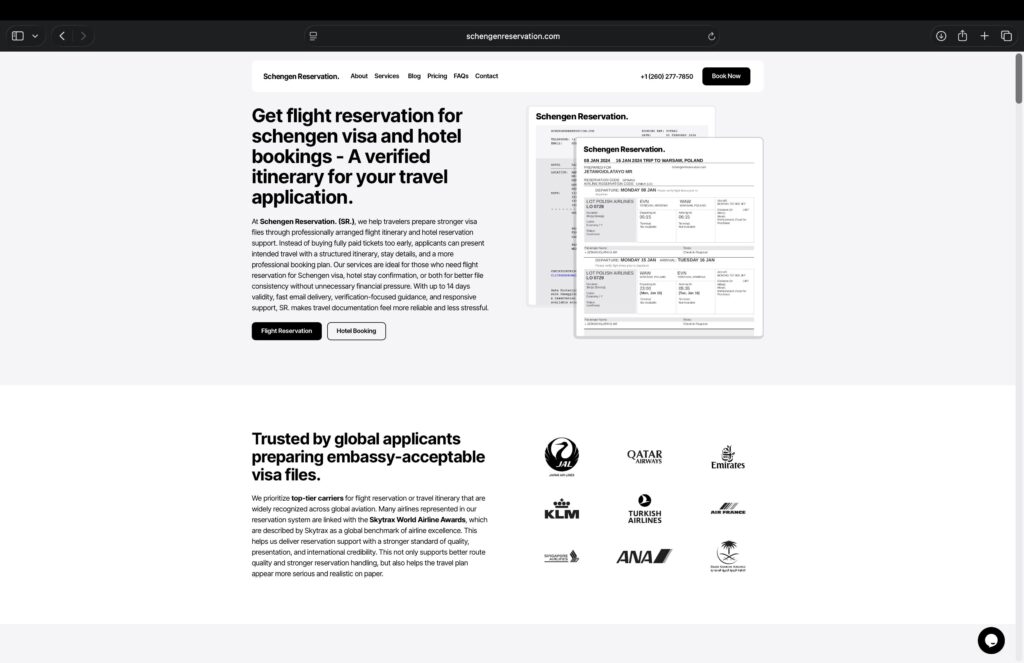
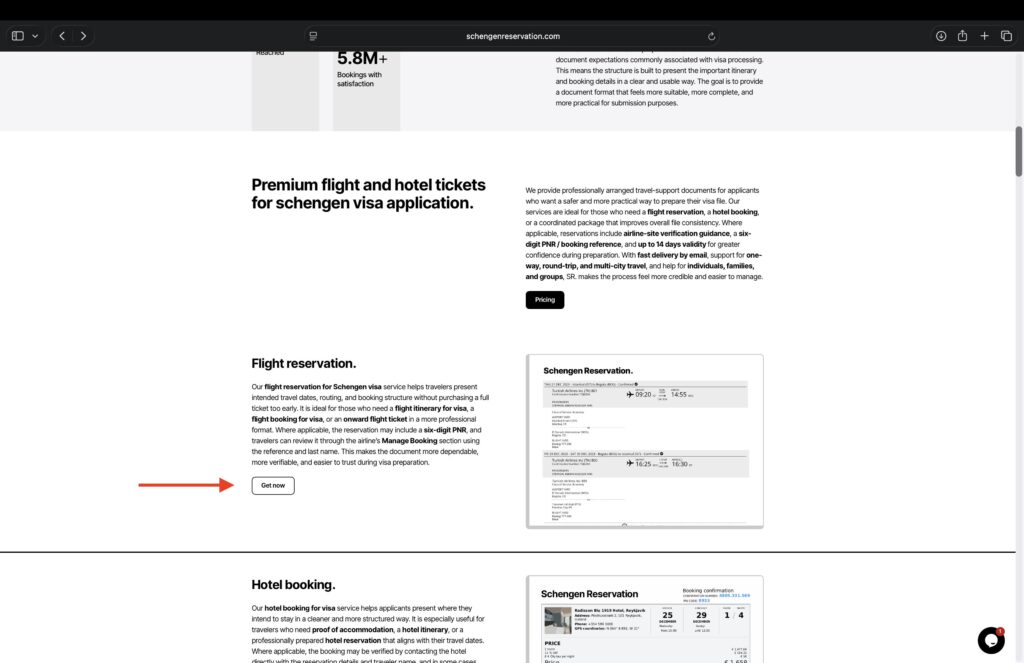
Start with the flight reservation page on Schengen Reservation
An Egyptian applicant preparing a short-stay Italy visa file needed a dummy ticket for visa, but did not want to purchase a fully paid fare too early. He visited Schengen Reservation and opened the Flight Reservation service because he specifically needed a structured flight itinerary for visa to support the travel side of his Italy application.
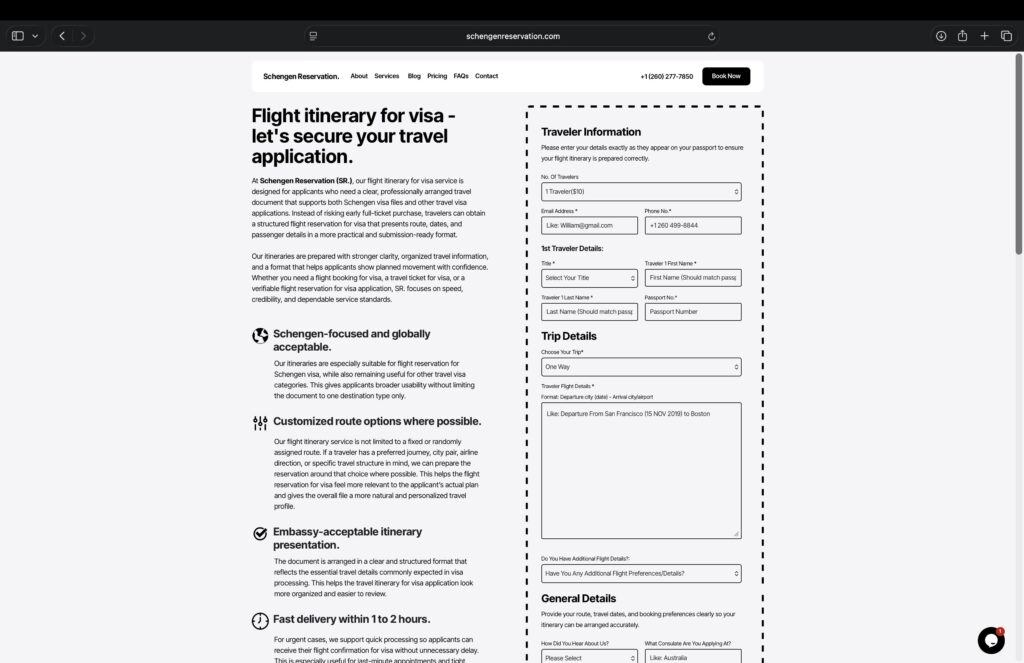
Enter passport-matching traveler details for the Italy booking
He entered his full name, surname, email address, phone number, and passport number exactly as shown on his passport. This is one of the most important steps when ordering a flight reservation for visa, because the final itinerary should match the traveler’s real identity details from the start.
Choose the right trip type for an Italy Schengen visa
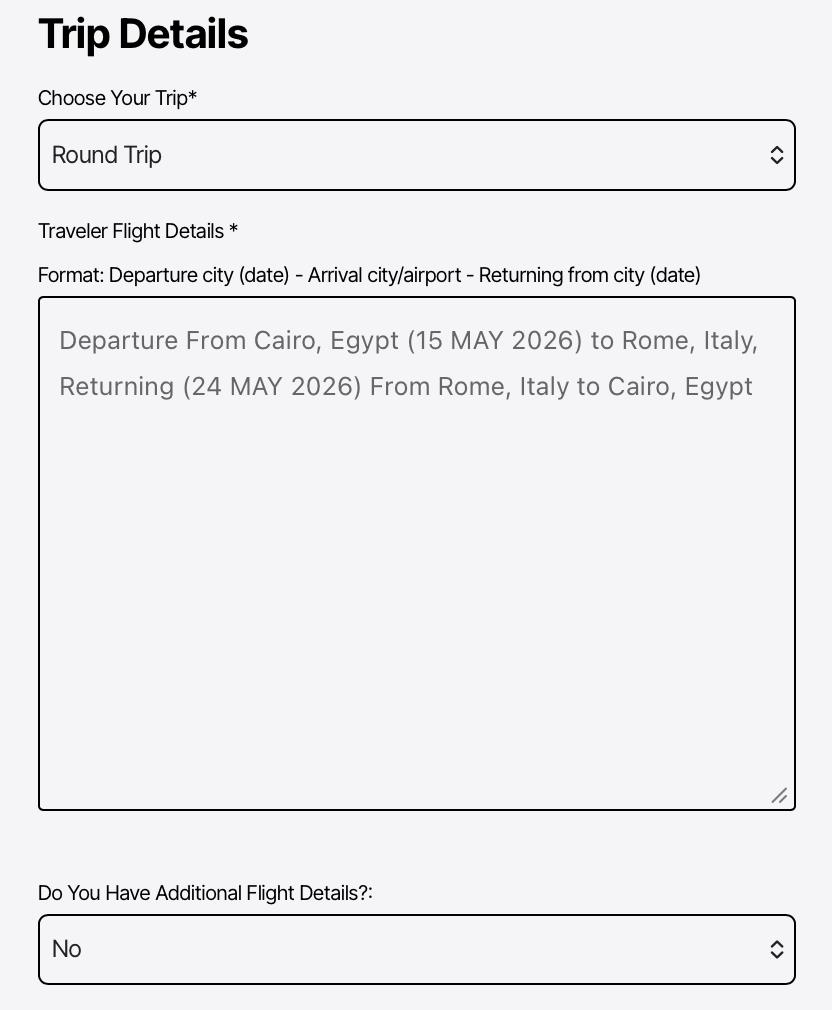
Since he planned to travel from Cairo to Italy and return after a short visit, he selected the round-trip option. That helped the travel itinerary for visa application reflect a normal tourism pattern, which usually looks cleaner and more natural in an Italy file.
Add route details and preferred travel plan clearly
He entered his departure city, destination in Italy, travel date, and return date carefully. Because he already had a preferred journey in mind, he also used the additional preference section so the flight booking for visa would follow his actual route rather than a random generic pattern.
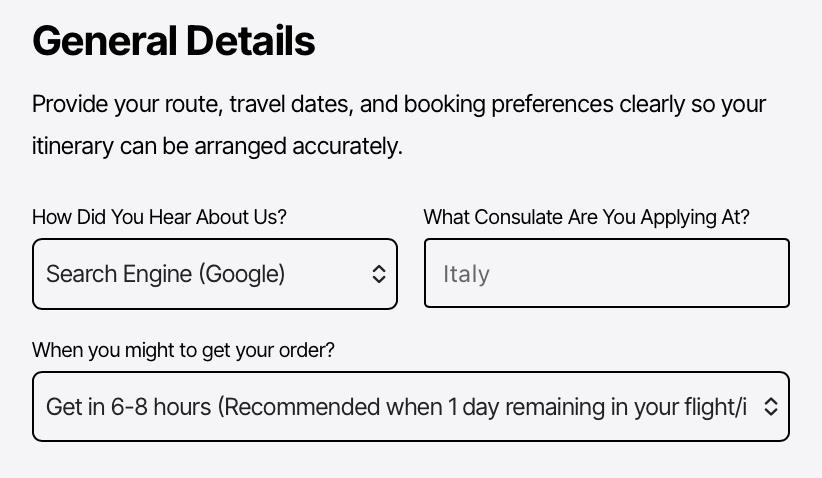
Complete the consulate and delivery information
He then filled in the visa-related details, including the consulate information and how quickly he needed the document. This step made the travel reservation more relevant to his real Italy application timeline, especially because he needed the booking urgently.
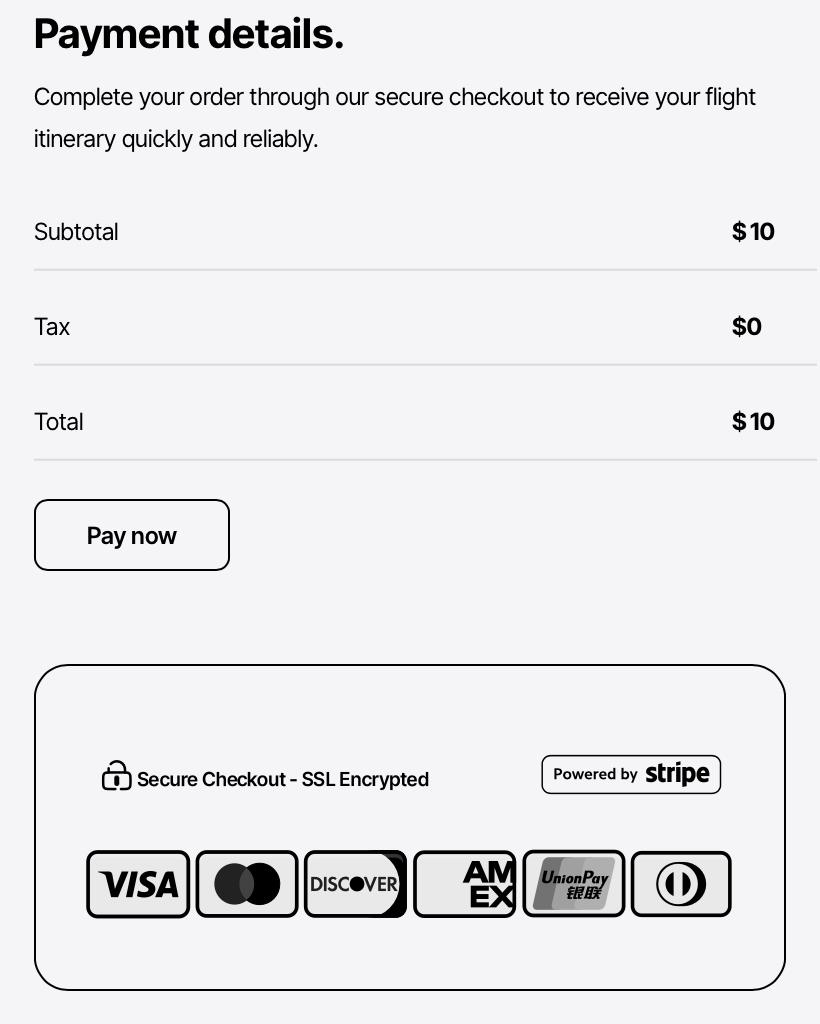
Place the order through secure checkout
After reviewing everything, he completed the payment through the secure online checkout. This gave him a practical way to obtain a flight reservation without payment of the full airfare while keeping the booking process simple and professionally handled.
Review and verify the flight reservation after email delivery
When the itinerary arrived by email, he checked the route, dates, and traveler details carefully. Where applicable, he could verify the verifiable flight reservation for visa application by visiting the airline’s website, opening Manage Booking, and entering the booking reference together with his last name.
Why this process worked well for his Italy visa file
For this Egyptian applicant, the process worked because it gave him a clear ticket reservation for visa without exposing him to unnecessary early ticket cost. Instead of rushing into a full fare, he was able to use a more practical and organized flight confirmation for visa, which made his Italy travel plan feel clearer, more credible, and easier to present.
Why some Italy applications feel stronger than others
Often, the difference is not hidden. It is visible in the file itself.
A stronger application usually shows:
clear purpose,
aligned dates,
organized route planning,
usable proof of accommodation,
credible budgeting,
and a sense that the applicant thought through the trip before submitting it.
A weaker one often shows:
rushed itinerary logic,
unclear stay planning,
misaligned dates,
or a visible tension between what the file claims and what the documents imply.
That is why high-quality support documents matter. A properly arranged flight itinerary, a reliable hotel reservation, or a coordinated travel reservation package can make the travel side of the file feel much more considered.
Booking support through Schengen Reservation
If you are building an Italy file and need help with the travel side, Schengen Reservation (SR.) can be used in three practical ways:
Flight itinerary only
If you already know where you will stay, but you need transport planning presented professionally, you can use the service for a flight reservation for visa or flight itinerary for visa.
Hotel booking only
If your movement is already clear but you need accommodation support, you can use the service for a hotel booking for visa or proof of accommodation.
Flight plus hotel together
If you want the transport and lodging sides of the file to align naturally, you can use both in one coordinated booking structure.
That flexibility is especially useful for Italy files because the stronger the alignment between your route and your stay, the easier the application becomes to read.
Frequently Asked Questions
- What is the best way to start an Italy Schengen visa application?
Start by confirming whether you actually need a visa through the official Italian visa portal. After that, identify your travel purpose and build the file around that purpose rather than collecting random documents.
- Do all countries need a Schengen visa for Italy?
No. Some nationalities are visa-exempt for short stays, while others fall under the EU visa-requirement list. That is why nationality verification should always come first.
- What if I need a flight itinerary but do not want to buy a full ticket yet?
You can use a flight itinerary for visa or flight reservation for visa to show intended movement without committing to a fully paid fare too early. This is one of the most practical ways to support the transport side of the file.
- Is hotel booking necessary?
In many cases, yes. A hotel booking for visa often functions as proof of accommodation, which helps show where you intend to stay and how your stay aligns with the trip.
- What types of short Italy visas are most common?
Tourism, business visits, family or friend visits, and short special-purpose travel are among the most common practical categories for Italy Schengen applications.
- Can I use Schengen Reservation for only one part of my file?
Yes. You can use it for the flight itinerary, the hotel booking, or both together, depending on what your file still needs.
- Why do aligned travel and stay dates matter?
Because they make the application easier to understand. If your route and accommodation records fit naturally together, the file feels more coherent and more prepared.
- Should I apply with generic documents if I am short on time?
No. Even under time pressure, the stronger approach is always to use documents that fit your actual trip logic. A rushed file with weak alignment can create more trouble than it solves.
- Does a stronger file guarantee approval?
No. No document set can guarantee a visa result. What it can do is make your application more organized, more persuasive, and easier to review.
- What is the biggest mistake applicants make?
One of the most common mistakes is treating each document as separate instead of building one coherent travel story. The strongest files work as one.
Conclusion
If you want to understand how to apply for a Schengen visa for Italy, the real answer is not “fill a form and wait.” The real answer is to build a file that reads well. You need to know whether you require a visa, choose the right short-stay purpose, gather the correct categories of documents, and make sure the travel and accommodation sides of the application support the same story.
That is why route planning, lodging support, and document alignment matter so much. A clean flight itinerary, a credible hotel booking, or both together in one coordinated structure can help transform the travel side of the file from something merely technical into something far more persuasive. If your dates align, your purpose is evident, your paperwork is coherent, and your stay plan matches your route, your application begins to feel more deliberate.
That is also why Schengen Reservation can be a practical support tool in this process. Whether you need only a flight reservation, only a hotel booking, or a combined package that helps the file feel more unified, the aim should always be the same: a clearer, stronger, and more readable Italy Schengen application.